Address
Right Bhusari Colony, Kothrud, Pune, Maharashtra
Work Hours
Flexible Working Hours
Every few months, someone in a marketing group asks the same question: “Do likes and shares actually help my Google rankings?”
In 2026, the honest answer is still a little uncomfortable — no, and yes. No, Google doesn’t plug your share count into its algorithm. Yes, ignoring social media is quietly costing you rankings anyway. The truth lives in the gap between those two answers, and that gap is where the real opportunity is.
Google has been consistently clear for the past decade that social signals aren’t a direct ranking factor. John Mueller has repeated it. Gary Illyes once compared social media links to “a single drop in an ocean” of PageRank. If you’ve been buying likes or chasing follower counts hoping they’ll move the needle on your keyword rankings, you can stop. Buying social signals wastes budget on something Google simply ignores.
But here’s the part most “social signals don’t matter” articles conveniently leave out: content that gets a lot of social shares is usually high-quality, well-promoted content that also earns backlinks and traffic — and it’s those backlinks and engagement signals, not the shares themselves, that move rankings.
So social media isn’t the ranking factor. It’s the delivery mechanism for the things that are.
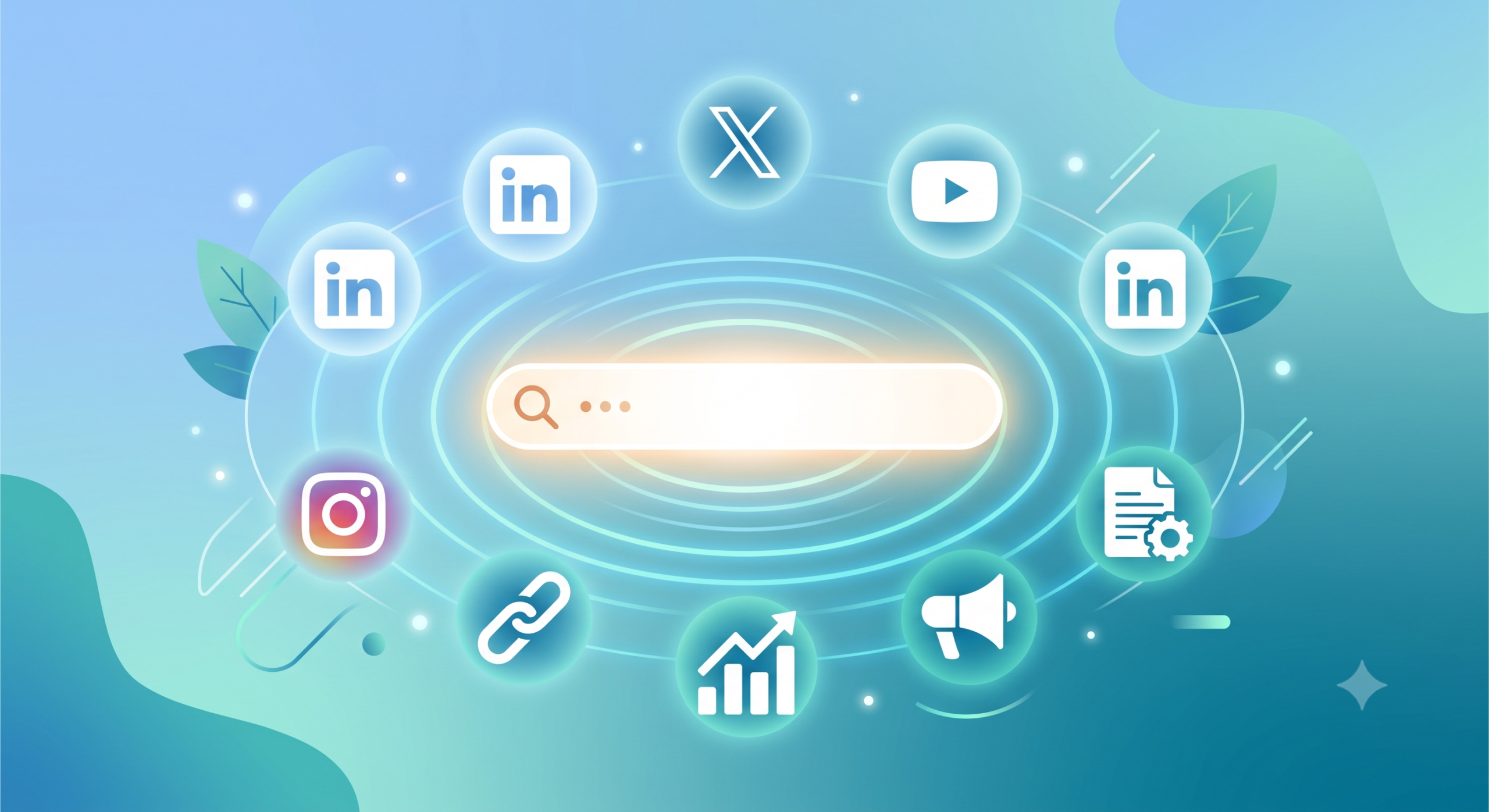
Think of social media as the first domino, not the last. Social doesn’t directly tell Google to rank you higher — it sets off a chain reaction that leads to better rankings. Here’s what that chain actually looks like in 2026:
1. Faster discovery and indexing When content spreads across LinkedIn, X, or Reddit, Googlebot finds new crawl paths created by that sharing activity, which shortens the time between publishing and indexing. For time-sensitive content — a festival announcement, a product launch, a trending topic — that speed advantage is real.
2. Referral traffic that behaves like a quality signal Even though Google doesn’t count likes or shares directly, a surge in traffic from social tells search engines the page is satisfying search intent, and visitors who arrive primed with context tend to stay longer and explore more pages. Google pays attention to how users interact with your content — time on page, bounce rate, return visits — and high-quality social traffic strengthens those engagement signals.
3. Editorial backlinks — the real prize This is the biggest one. High-performing social posts expose content to journalists and bloggers who go on to create backlinks, and a single viral LinkedIn post reaching the right audience can generate more editorial links than an entire outreach campaign. Editorial links are exactly the kind Google trusts most, because nobody paid for them.
4. Branded search growth When your brand shows up repeatedly on social and people then search for it by name, that branded search volume grows — and there’s strong evidence from experienced SEOs that Google treats branded search as a trust and authority signal. If users are searching “SEO tips [yourbrand]” instead of just “SEO tips,” Google registers that as a vote of confidence that users specifically want your perspective.
Two things have shifted the ground under this whole conversation this year.
Brand is the new backlink. Following the 2026 Core Updates, sites that relied purely on keyword matching and high-volume link building saw sharp drops, while brands with genuine real-world footprints surged — Google is increasingly ranking the brand behind a site, not just the site itself. A consistent, recognizable presence across LinkedIn, Instagram, and industry platforms is turning into a trust shortcut Google’s systems lean on.
Search itself has gone multi-platform. YouTube is now the world’s second-largest search engine, LinkedIn content is indexed and ranks directly in Google results, Pinterest drives meaningful image-based organic traffic, and TikTok’s search function is becoming a primary discovery channel for younger audiences. Increasingly, people are starting their searches on YouTube, LinkedIn, Instagram, or TikTok before they ever open Google. Optimizing only for the blue links is optimizing for half your actual audience.
AI Overviews reward entity recognition. As AI-powered search tools pull from entity-rich sources, a strong social presence that builds brand recognition is becoming a genuine competitive advantage — social media is now shaping SEO through digital authority and AI discoverability, not through a direct ranking boost.
If you’re managing SEO for a brand, a temple community page, or a client project in 2026, here’s where the effort should actually go:
Social signals were never going to become a line item in Google’s algorithm, and in 2026 they still aren’t. What changed is how much weight the downstream effects of social activity now carry — brand trust, entity recognition, editorial links, and faster discovery all trace back to a healthy social presence.
The brands winning in 2026 aren’t the ones gaming likes. They’re the ones building something worth sharing in the first place, then letting the chain reaction do its work.
