
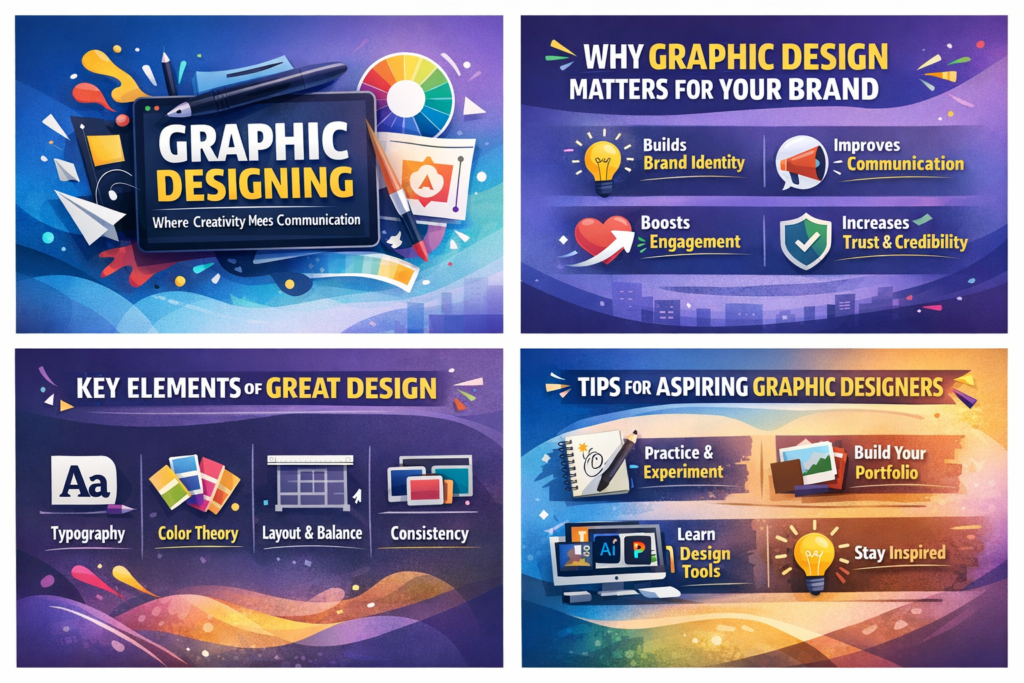

Graphic design or visual communication plays a crucial role in how brands connect with their audience. From logos and social media creatives to websites and advertisements, graphic designing shapes how people perceive a brand. It is not just about making things look attractive—it is about conveying the right message, building trust, and creating meaningful experiences through visuals.
Graphic designing has evolved into a strategic business tool that blends creativity with marketing, psychology, and technology. Whether you are a business owner, marketer, or aspiring designer, understanding the importance of graphic design can help you stand out in a crowded marketplace.
What Is Graphic Designing?
Graphic designing is the art and practice of creating visual content to communicate ideas and messages. Designers use elements such as typography, color, images, shapes, and layouts to create visuals that are both functional and appealing.
The goal of graphic design is clarity and impact. A well-designed visual should grab attention, communicate information quickly, and leave a lasting impression. From branding materials to digital media, graphic design helps transform ideas into visuals that people can understand and remember.
Why Graphic Design Is Important for Businesses
Graphic design plays a vital role in shaping brand identity and influencing customer behavior. Here’s why it matters so much:
1. Creates a Strong First Impression
First impressions are visual. When users visit your website or see your social media post, design is the first thing they notice. Professional and consistent design instantly builds credibility and trust.
2. Builds Brand Identity
Logos, color palettes, fonts, and visual styles define how your brand looks and feels. Consistent graphic design helps your audience recognize your brand across different platforms and channels.
3. Improves Communication
Visuals can simplify complex ideas. Infographics, illustrations, and well-designed layouts make information easier to understand and more engaging than plain text.
4. Boosts Engagement and Conversions
Eye-catching designs attract attention and encourage users to take action—whether it’s clicking a button, reading a post, or making a purchase.
Key Elements of Effective Graphic Design
Great graphic design is built on strong fundamentals. Some essential elements include:
Typography
Fonts play a major role in setting the tone of a design. Choosing the right typography improves readability and helps convey emotions such as trust, creativity, or professionalism.
Color Theory
Colors evoke emotions and influence decisions. Using the right color combinations strengthens branding and creates visual harmony.
Layout and Composition
A balanced layout guides the viewer’s eye and ensures that information is presented clearly. White space, alignment, and hierarchy are key to good composition.
Consistency
Consistency across all designs—online and offline—creates a cohesive brand experience and reinforces recognition.
Types of Graphic Designing
Graphic design is a broad field with many specializations. Some of the most common types include:
Branding and Logo Design
This focuses on creating a visual identity for a business, including logos, brand guidelines, and visual assets.
Digital and Social Media Design
Designs created for websites, social media posts, ads, banners, and email marketing fall under this category.
Print Design
Includes brochures, flyers, posters, business cards, magazines, and packaging materials.
UI/UX Design
User interface and user experience design focuses on creating visually appealing and user-friendly digital products such as websites and mobile apps.
Graphic Design Trends Shaping the Industry
Graphic design trends continue to evolve with technology and user preferences. Some popular trends include:
- Minimal and clean design
- Bold typography and strong contrasts
- Custom illustrations and iconography
- Motion graphics and animated visuals
- 3D elements and immersive design
While trends are important, timeless design principles should always come first.
Essential Tools for Graphic Designers
Modern graphic designers rely on powerful tools to bring ideas to life. Some widely used tools include:
- Design software for vector and raster graphics
- Prototyping tools for UI/UX design
- Collaboration platforms for feedback and teamwork
Mastering these tools allows designers to work efficiently and deliver high-quality results.
Tips for Aspiring Graphic Designers
If you’re planning to build a career in graphic designing, here are a few helpful tips:
- Practice consistently and work on real-world projects
- Study design principles, not just tools
- Build a strong portfolio that showcases your best work
- Stay updated with design trends and industry changes
- Learn basic marketing and branding concepts
Graphic design is a skill that improves with time, experimentation, and continuous learning.
The Future of Graphic Designing
As businesses increasingly move online, the demand for skilled graphic designers continues to grow. With the rise of digital marketing, social media, and user-centric design, graphic designers play a key role in shaping digital experiences.
The future of graphic designing lies in adaptability—designers who combine creativity with strategy and technology will always be in demand.
Final Thoughts
Graphic designing is more than just visual aesthetics—it is a powerful communication tool that connects brands with people. A strong design tells a story, builds trust, and drives action. Whether you’re a business looking to grow or a creative professional aiming to sharpen your skills, investing in quality graphic design is always a smart move.
In a world full of noise, great design helps your message stand out—and that’s what makes graphic designing truly impactful. For Portfolio Visit: Portfolio